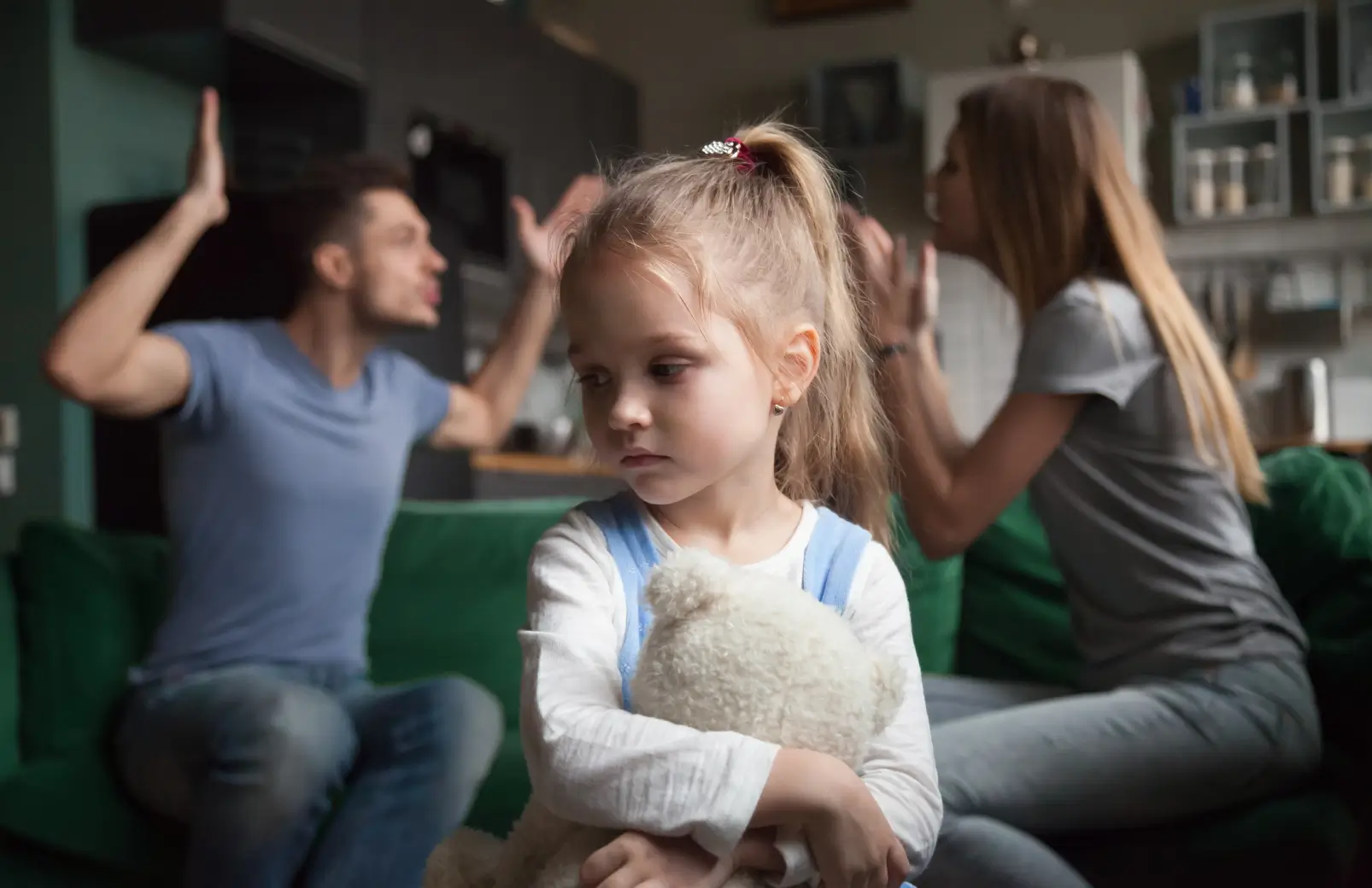
Your child has been quieter than usual. Maybe they've started apologizing for things that don't warrant an apology, or they've asked, out of nowhere, if they did something wrong. If you're going through a separation, these moments may be more than passing phases. They may be signs that your child has begun carrying a weight no child should carry: the belief that they caused the divorce.
Understanding why kids blame themselves for divorce is one of the most important things a parent can do during this transition. Children process upheaval differently than adults. Where you see a complicated relationship that ran its course, your child may see a direct line between something they said at dinner and the fact that Mom or Dad no longer lives at home. This kind of thinking is not a failure of character or intelligence. It is a normal part of how young minds try to make sense of disruption, and it requires thoughtful, consistent parenting to address.
In Season 4, Episode 2 of the Co-Parenting Conversations podcast, hosts Jaimie and Mike explore this topic in depth, walking through why children feel responsible for the divorce and what parents can do to help them let go of that burden. The conversation reinforces what child psychologists have long understood: self-blame in children is common, but it does not have to become permanent.
How Magical Thinking Leads Children to Self-Blame
To understand why kids blame themselves for divorce, it helps to understand a concept called magical thinking in children. This is the developmental tendency for young children to believe their thoughts, wishes, and actions can directly influence the world around them. A child who wished a parent would go away during a tantrum may later believe that wish "came true" when that parent moves out.
Magical thinking in children is not a disorder or a flaw. It is a natural stage of cognitive development, most prominent between the ages of two and seven but capable of lingering well into elementary school. At its core, it gives children a sense of control in a world where they have very little. If they can believe they caused something bad, they can also believe they have the power to fix it. That logic, while understandable, sets the stage for childhood guilt that quietly erodes self-worth.
A child operating under magical thinking might reason along these lines: "I cause Mommy and Daddy to feel happy or angry. Since I can cause things to happen, I must have caused the divorce. Since I caused something bad, I must be bad." This internal narrative can become deeply rooted, especially if no one intervenes to correct it.
Older children and teenagers are not immune, either. While they may no longer believe in the literal magic of their thoughts, school-aged kids often replay specific arguments or moments of misbehavior, convincing themselves that if they had simply been better, the marriage would have survived. Teens, who tend toward black-and-white thinking, may assign blame to one parent or to themselves as a way of making an overwhelming situation feel more orderly.
Why Self-Blame Feels "Safer" Than the Truth
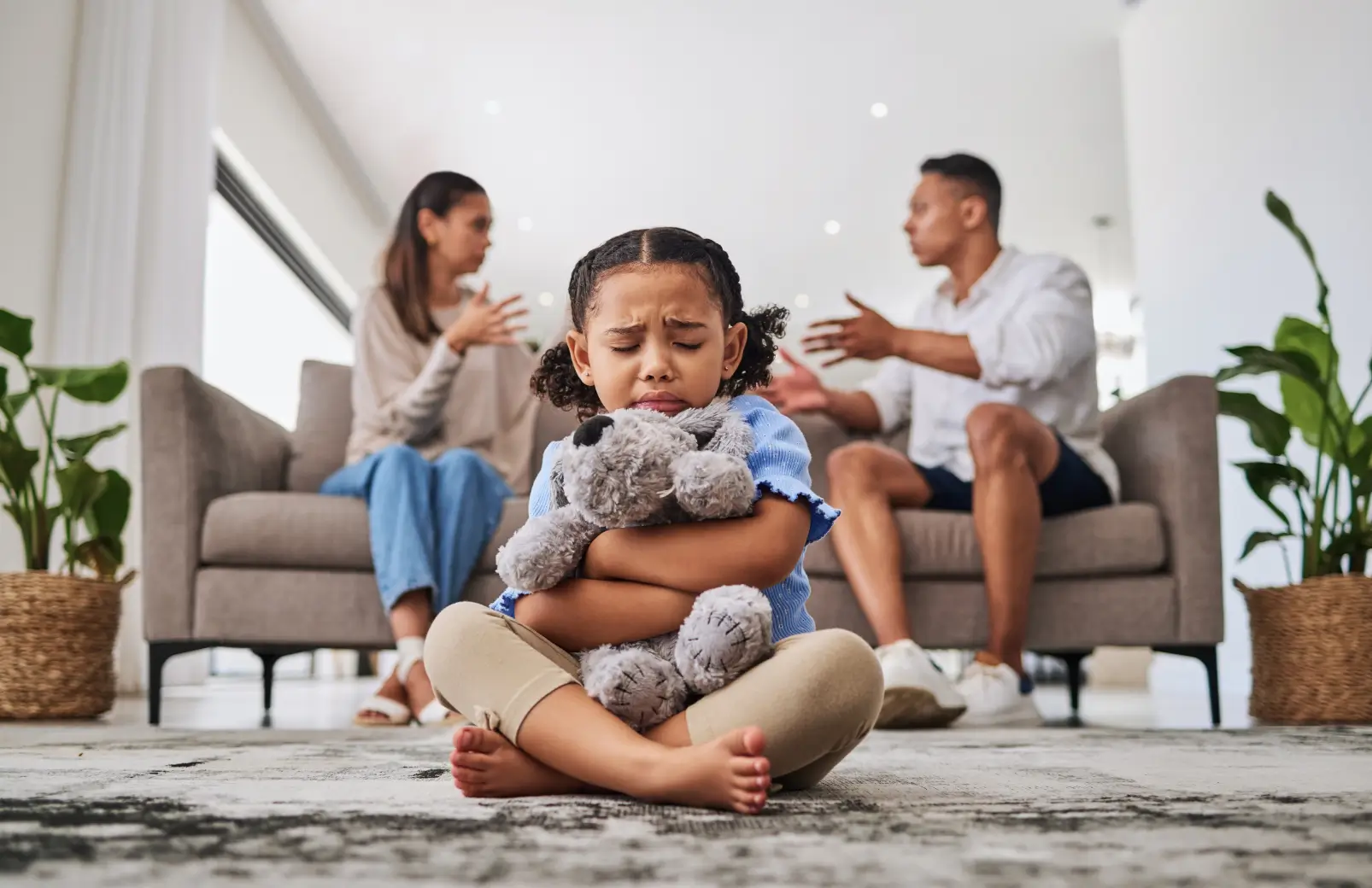
One of the reasons kids blame themselves for divorce is that self-blame, paradoxically, feels less frightening than the alternative. For a child, accepting that the adults in their life have problems they cannot control is a deeply unsettling thought. It challenges the foundational belief that their parents are safe, stable, and in charge.
From an attachment perspective, children are biologically driven to see their caregivers as dependable. When family life becomes unpredictable, a child's developing mind faces a difficult choice: accept that a parent is struggling, or decide that the problem lies within themselves. For many children, "I am the problem" feels more manageable than "my world is falling apart and no one can stop it."
This is why child guilt after parents split can persist long after the initial shock of the separation fades. The belief is not about logic. It is about emotional survival. And because children often lack the vocabulary to express these feelings, the guilt tends to show up in behavior rather than words: withdrawal, people-pleasing, declining grades, sleep disruption, or sudden clinginess.
If you've noticed behavioral changes in your child during or after your separation, understanding the emotional stages they may be experiencing can help you respond with greater awareness. The effects of divorce on children are well documented, and recognizing the signs early gives you the best opportunity to intervene.
How Self-Blame Shows Up at Different Ages
Childhood guilt during divorce does not look the same across every developmental stage. Knowing what to watch for at your child's age can help you spot the signs before they become entrenched patterns.
Toddlers and preschoolers (ages 2 to 5) are most susceptible to magical thinking in children. They may become clingy, have more frequent tantrums, or regress in behaviors they had outgrown, like bedwetting. Because they lack the language to express guilt, their distress tends to surface physically: stomachaches, difficulty sleeping, or a sudden fear of being left alone. They may also engage in repetitive play that mirrors family conflict, which is their way of processing what they cannot yet articulate.
School-aged children (ages 6 to 12) have a greater awareness of family dynamics and are more likely to connect specific events to the divorce. A child in this age range might fixate on a particular argument they witnessed or a time they misbehaved, convincing themselves it was the tipping point. They may also experience loyalty conflicts, feeling torn between parents, which compounds their sense of guilt. Academic struggles, withdrawal from friends, or sudden shifts in mood are common indicators during this stage. For a deeper look at how divorce affects children at different developmental stages, this resource on the worst age for divorce for children offers additional context.
Teenagers (ages 13 to 17) process divorce through a more complex emotional lens. While they are less likely to engage in magical thinking, they are more prone to anger, resentment, and a belief that they should have been able to prevent the split. Some teens take on a caretaking role, attempting to manage a parent's emotions or mediate conflict, which reinforces the idea that the family's well-being rests on their shoulders. Others may act out as a way of expressing frustration they cannot name.
What Parents Can Do to Help
Recognizing that your child may be struggling with childhood guilt is the first step. The next is taking deliberate, ongoing action to help them release that burden. Here are specific strategies that can make a real difference.
Tell Them Directly and Repeatedly That the Divorce Is Not Their Fault
This may feel obvious to you, but it is not obvious to your child. Children need to hear these words clearly, calmly, and more than once. A single conversation is unlikely to undo the narrative they've built in their minds. Return to this message whenever you sense it's needed, using age-appropriate language. For younger children, something as simple as "Mommy and Daddy's problems are grown-up problems, and they have nothing to do with you" can provide meaningful relief. For older children, be more specific: "I know you might wonder if something you did caused this. It didn't. This is about Mom and Dad, not about you."
Create Space for Their Feelings Without Rushing to Fix Them
When a child says, "Did I cause the divorce?" your instinct may be to immediately reassure and move on. Instead, slow down. Acknowledge what they're feeling before correcting the belief. You might say, "I can see that you've been worrying about this, and I'm glad you told me. That must feel really heavy." Validating the emotion first makes the reassurance that follows more believable. If you're looking for guidance on how to tell kids about divorce in a way that minimizes confusion, that resource walks through the conversation step by step.
Be Consistent Across Both Households
Children are perceptive. If they receive mixed messages from each parent, or if they sense tension during transitions, it reinforces the idea that they are somehow responsible for the conflict. Maintaining consistent routines, rules, and emotional tone across both homes provides the stability children need to feel secure. This is one of the core principles taught in The Center for Divorce Education's Children in Between Online course, which helps parents identify the most common ways children get caught in the middle of parental conflict and learn skills to prevent it.
Avoid Exposing Your Child to Adult Conflict
Research consistently shows that the single biggest factor affecting how children respond to divorce is the level of conflict they witness between their parents. Even when you think your child is not listening, they are absorbing the emotional atmosphere. Negative comments about the other parent, arguments during drop-offs, or venting in earshot all signal to a child that the situation is still unstable, which deepens their anxiety and guilt. Parents navigating particularly difficult co-parenting dynamics may benefit from the High Conflict Solutions Parenting Class, which provides structured techniques for reducing hostility and keeping children out of the crossfire.
Watch for Behavioral Signals
Because children often cannot verbalize their guilt, parents need to stay attuned to changes in behavior. A child who was once outgoing but has become withdrawn, or a child whose grades have suddenly dropped, may be struggling with emotions they don't know how to express. Staying engaged with teachers, coaches, and other caregivers can give you a broader picture of how your child is coping. For practical strategies on supporting your child's emotional health, our guide to helping children cope with divorce covers techniques that parents can start using immediately.
FAQs
Some children do gradually release feelings of self-blame as they mature and gain a better understanding of adult relationships. However, this is not something parents should leave to chance. Without direct reassurance and open communication, childhood guilt can quietly persist, shaping how a child views themselves and their relationships for years. Proactive conversations, emotional validation, and a stable co-parenting environment significantly improve the likelihood that a child will process and move past these feelings in a healthy way.
More To Discover




*Included in SAMHSA's National Registry of Evidence-Based Programs and Practices