
When a family undergoes separation, children often feel as though their world has shifted beneath them. The stages of divorce for a child describe how children may move through emotional phases that resemble the classic grief process, including denial, anger, bargaining, depression, and acceptance. As a parent, you can help your child navigate these stages of grief for kids by recognizing what each stage looks like, how children of different ages respond, and how to offer support that promotes healing and resilience.
This guide offers practical insight into the five stages of divorce grief, connects you with useful resources from The Center for Divorce Education, and empowers you to support your child’s emotional well-being through this transition.
Stage 1: Denial and Shock
In the first stage, a child may act as if nothing has changed, insist everything will go back to “normal,” or attempt to ignore the separation. For very young children, denial might show up as confusion or repeated questions about “when will Mom and Dad get back together?”
- Age-specific reactions:
- Ages 2-5: May ask repeatedly, “Are we still a family?” or show physical symptoms (headaches, stomach aches) without clear cause.
- Ages 6-10: Might cling more strongly to one parent, or try to “fix” things by soothing the adult.
- Ages 11-14: Could withdraw or appear unperturbed, while inside feeling stunned or disillusioned.
- How you can help:
- Validate your child’s feelings: “I know this is a lot for you to take in.”
- Offer a simple, age-appropriate explanation of what’s happening and what will stay the same.
- Maintain routines and familiar elements (bedtime, meals, school) to anchor stability.
- Consider enrolling in a child-oriented class like CDE’s Children in Between: For Kids to give them tools early.
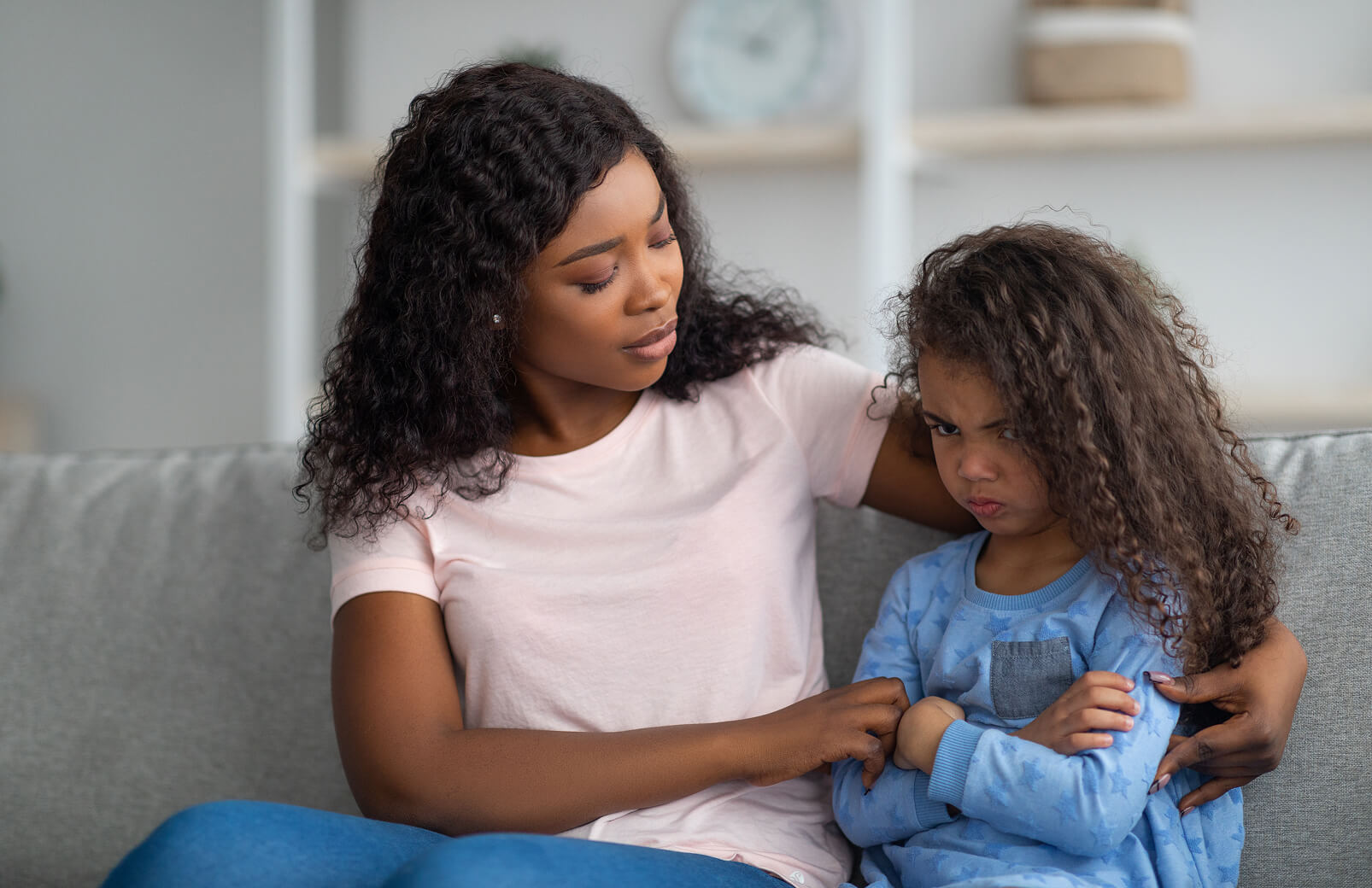
Children may become irritable or lash out at one or both parents, siblings or peers. They might blame the parent, the divorce process, or even themselves.
- Age-specific reactions:
- Ages 2-5: Tantrums may increase; a child may regress (bed-wetting, baby talk).
- Ages 6-10: May act out at school, challenge authority, or blame one parent openly.
- Ages 11-14: Could engage in risk-taking, lash out via social media, or avoid meaningful communication.
- How you can help:
- Respond with calm: Acknowledge the anger (“I see you’re upset and that’s understandable”).
- Set clear boundaries on behaviour while still validating the emotion (“You may be angry, but it’s not okay to yell at your sister”).
- Use shared activities (sports, art, gaming) to redirect energy and offer connection.
- As a parent dealing with a difficult ex, remember that how you handle anger models emotional regulation for your child.
Stage 3: Bargaining and Guilt
Children try deals like “If I behave, maybe you’ll stay together,” or “I will be good if you stop fighting.” They may carry guilt: “It’s my fault Mom and Dad are separating.”
- Age-specific reactions:
- Ages 2-5: May believe the divorce is a result of something they did (“I was naughty”) and attempt over-compliance.
- Ages 6-10: Might ask repeated “what if” questions, attempt to mediate between parents, or present false smiles to cover sadness.
- Ages 11-14: Could shift into caretaker mode, hide their pain behind academic achievement, or avoid making demands so as not to “add stress.”
- How you can help:
- Reassure: “This is not your fault, and you didn’t cause the separation.”
- Encourage open discussion of “what ifs” and explain what is within the child’s control (their behaviour) and what is not (the divorce).
- Encourage participation in programs like CDE’s Children in Between Online for parents to better understand these patterns and avoid reinforcing feelings of guilt.
Stage 4: Depression and Sadness
A child may begin to exhibit symptoms of sadness, withdrawal, difficulty engaging in activities once enjoyed, changes in sleep or appetite, or declining grades. This stage is often the deepest and most quietly troubling.
- Age-specific reactions:
- Ages 2-5: May seem quieter, clingier, more fearful of separation, or revert to younger behaviours.
- Ages 6-10: Might say things like “I don’t care,” withdraw from friends, complain of stomach/headaches, or show a sudden drop in performance.
- Ages 11-14: Could experience mood swings, self-isolation, increased use of devices, or vocalize statements like “What’s the point?”
- How you can help:
- Monitor behaviour changes closely and differentiate from typical “teen moods” vs deeper signs of grief or depression.
- Engage with school counselors, pediatricians, or therapists when necessary.
- Maintain open lines of communication and offer routine check-ins without pressure (“How are you feeling today? And there's no right or wrong answer.”)
- Use resources from CDE’s Parent Resources page to identify early warning signs and promote emotional well-being.
Stage 5: Acceptance and Growth
The child begins to acknowledge the new family structure, accepts that the separation is real, and starts to explore healthy coping and adaptation. This does not mean they are “OK” or unaffected, but they are moving toward healing.
- Age-specific reactions:
- Ages 2-5: May express fewer fears, might ask fewer repetitive questions, and resume playful, expansive behaviour.
- Ages 6-10: Will likely demonstrate more resilience, talk about two homes as normal, ask genuine questions about the future, and broaden friendships.
- Ages 11-14: Might show increased independence, engage in planning with both parents, articulate their feelings clearly, and explore positive identity separate from the divorce.
- How you can help:
- Celebrate milestones: Acknowledge when your child shows a healthy choice, such as using new coping tools or reaching out to both homes.
- Continue co-parenting efforts: Consistency, healthy communication, and respect between parents model growth for a child.
- If the divorce involves high conflict, consider CDE’s High Conflict Solutions Parenting Class to equip both parents (or you individually) for a healthier next chapter.
- Provide tools for future resilience: journaling, check-ins, parent-child discussions about change and progress.
Age-Tiered Support Tips at a Glance
| Age Group | Focus | Support Strategy |
| 2-5 years | Stability, routine, reassurance | Use simple language, keep routines unaltered, offer plenty of physical reassurance (hug, cuddle) |
| 6-10 years | Expression of feelings, peer support, structure | Encourage play, use child-friendly classes (like CDEs), keep both households aligned on key rules |
| 11-14 years | Autonomy, identity, peer connection | Offer choices, allow safe independence, encourage conversations about change, monitor social/emotional signals |
Frequently Asked Questions
Normal grief includes sadness, irritability, or regression that gradually improves. If symptoms persist (weeks of withdrawal, academic decline, talk of hopelessness), you should seek evaluation by a child therapist or pediatrician.
More To Discover




*Included in SAMHSA's National Registry of Evidence-Based Programs and Practices